How to Draw a Maple Leaf in 6 Steps (Easy)
This guide illustrates how to draw a maple leaf in six step. It provides detailed and easy to follow examples with simple instructions.
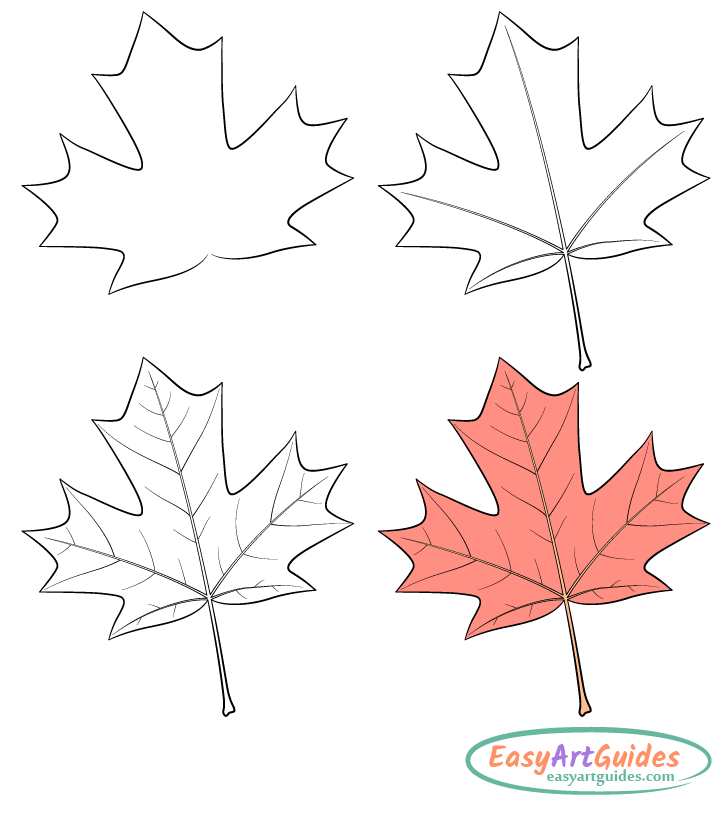
Depending on what part of the world you live in, maple leaves can be quite common. They have very distinct shapes and can be particularly beautiful in the fall when they turn different colors. This guide shows how to draw such a leaf with a few different color variations.
It’s recommended that you start the drawing in pencil as you will need to erase the guide lines used in the initial steps. If you wish, you can trace over your lines with a thin black marker later on to make your artwork look more like the examples.
Step 1 – Outline the Blade of the Leaf

As mentioned, this tutorial shows how to use some basic guide lines to structure the leaf’s shape. In the examples these lines are shown in blue just to make them easier to distinguish from the main drawing. You should create yours using a regular pencil and keep them very light.
First, draw an angled lightly curved line that will determine the center of the leaf. The midrib (the large center vein) and the stalk (also called the petiole) will run along this line as well.
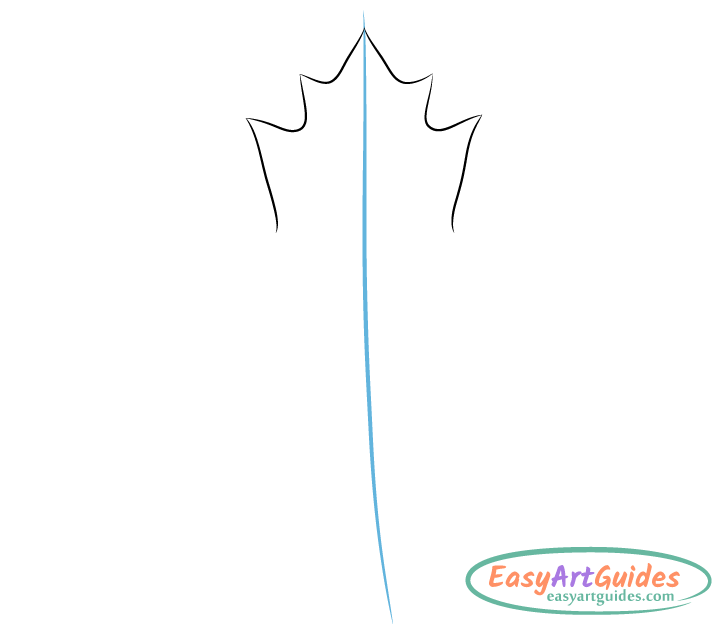
Around the upper part of the guide line draw the first section of the maple leaf’s blade. These sections are called the “lobes”. It’s shape should be similar to that of a crown with five “teeth” (pointy ends along the blade’s edges).
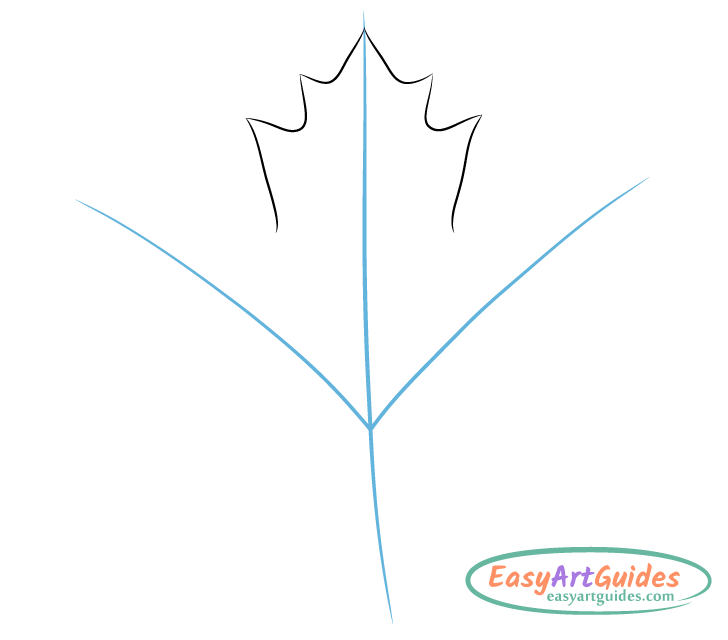
Draw another pair of guide lines branching out from slightly below the middle of the first line. Make these angled upwards and also make them slightly curved. The large veins that run down the middle of those leaf sections will later also be drawn along these lines.
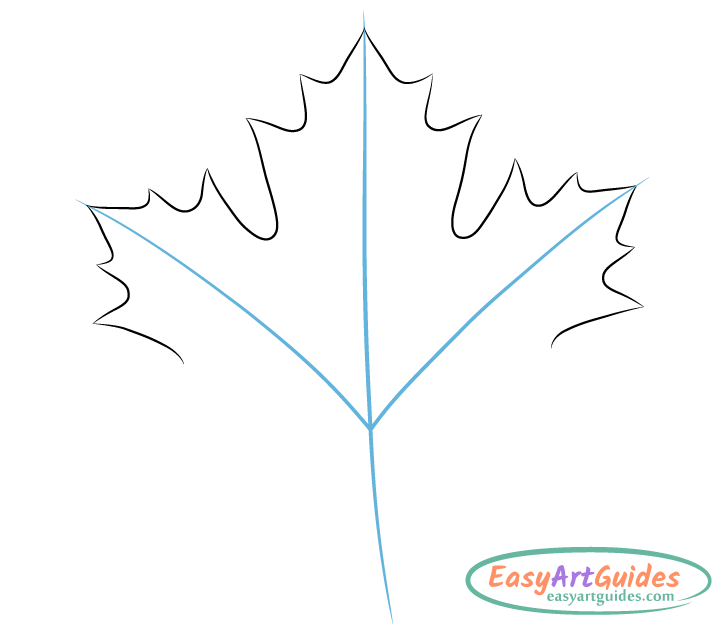
Using the lines as the center points draw another pair of crown-like shapes start close to their outer ends. Make these similar to the one in the center but smaller.
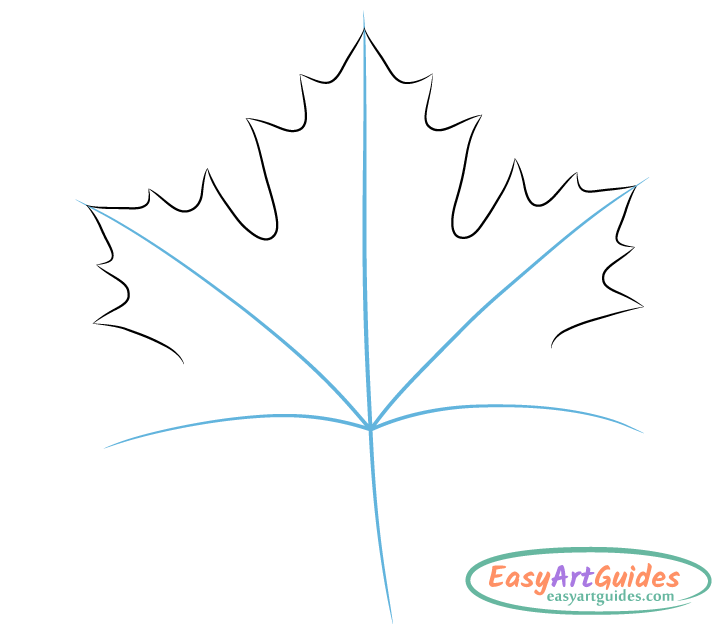
Draw yet another pair of curved lines. These should be pointing sideways. Also, they should originate from the same point as the previous two. Again, similar to the previous lines, these will be where the large veins of those leaf sections run along.
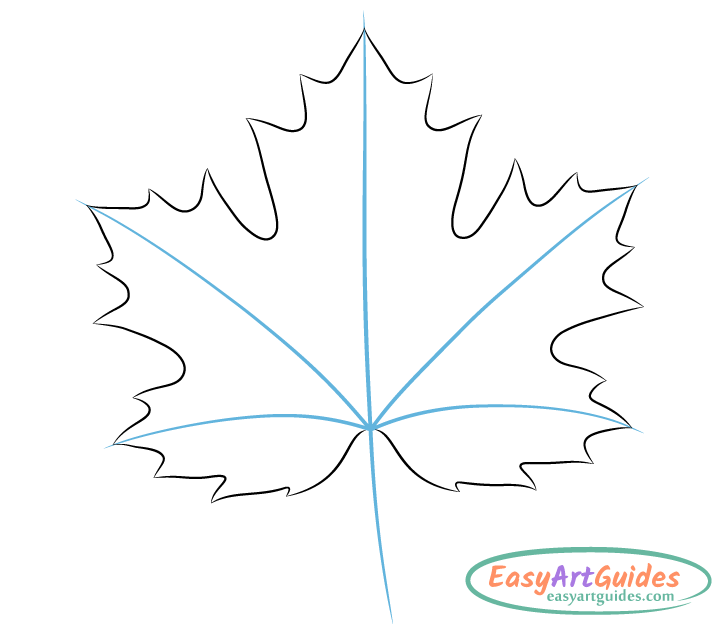
Using the above lines as guides, draw the last pair of the leaf’s lobes. Make these slightly different in shape from the previous three. First, draw each one to have three teeth and then add two more teeth along each of their bottoms. These sections should eventually curve upwards into the point that all of the branching out guide lines come out of.
Step 2 – Draw the Stalk/Petiole
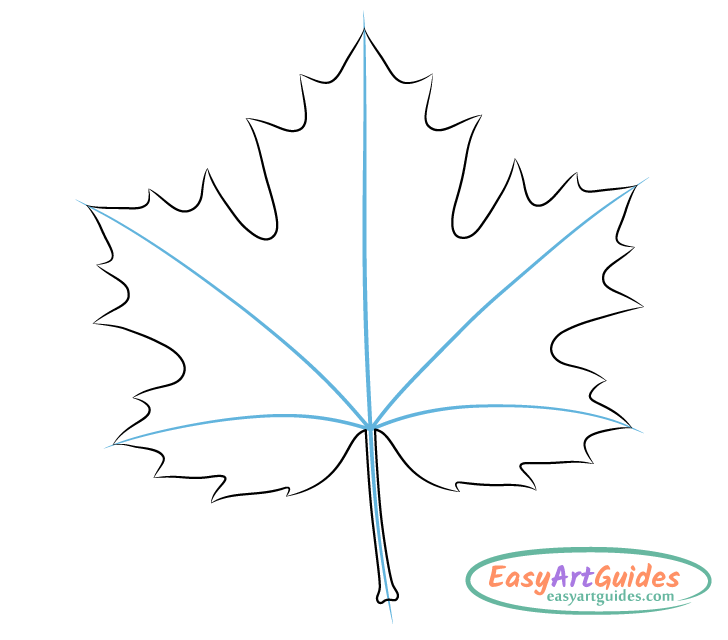
Going down from the blade draw the leaf’s stalk. As already mentioned this should follow the center guide line. Make the stalk wider around the bottom and draw it splitting into two small rounded sections on it’s bottom end.
Step 3 – Draw a Large Veins For Each of the Leaf’s Lobes
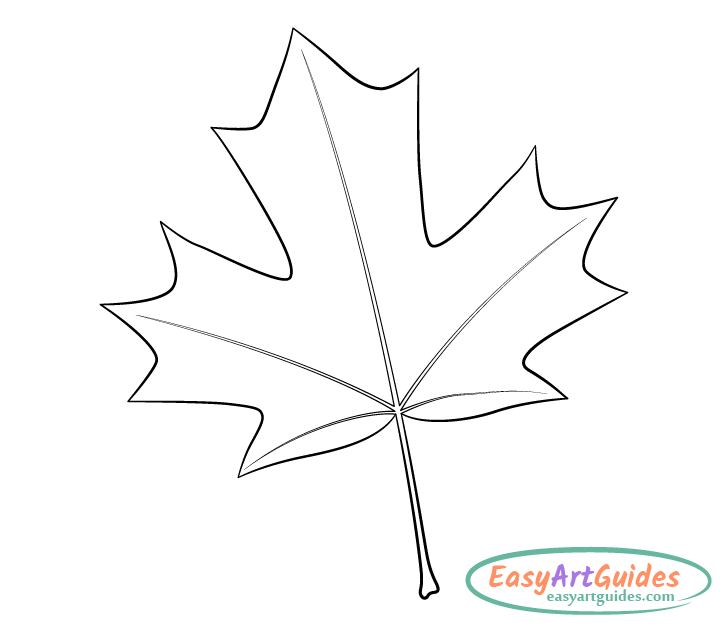
Running along each of the the guide lines draw the leaf’s large veins. Start with the one down the center and then draw the ones branching out from it on the sides. Make the veins narrower as they go out from the point where they are all joined together. You can define each vein with a pair of lines that converge slightly before hitting the edge of the blade.
Once you’ve draw the veins you can carefully clean up the guide lines using the corner of an eraser.
Step 4 – Draw the Small Veins Branching out From the Big Ones
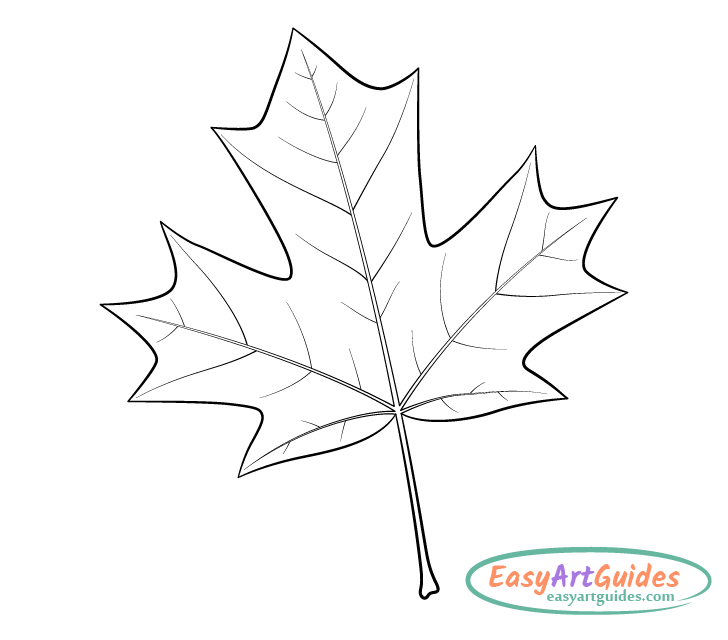
Draw a bunch of smaller veins branching out from the main ones. First, draw the ones that run towards the tips of the “teeth” of each section. Afterwards, draw some more that simply curve out from the large veins towards the edges of the blade. Make some shorter and some longer.
Once you’ve added all of the veins you can trace over your drawing with a thin black marker or darken your lines with the pencil.
Step 5 – Color the Maple Leaf Drawing
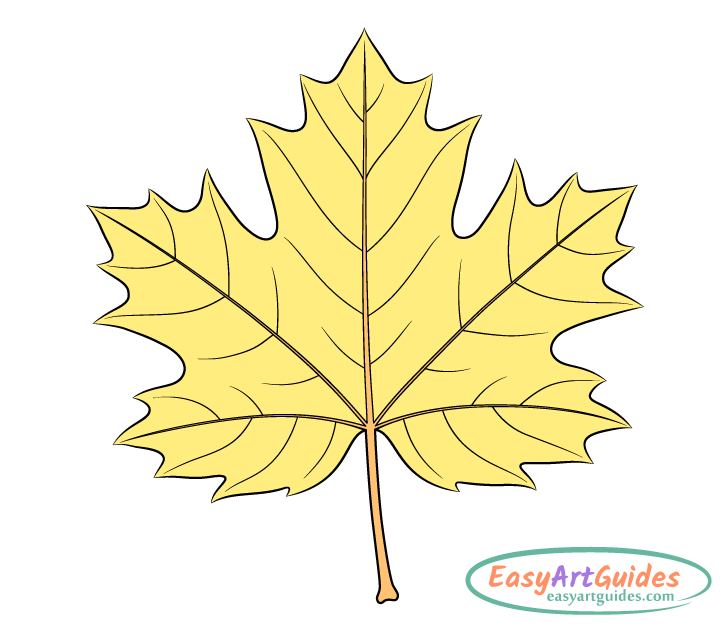
You can color the leaf several different ways. For a fall leaf you simply make it yellow as shown above and add a gradient to red in the next step. Alternatively you can make it a solid red or keep it a solid yellow for a simpler drawing.
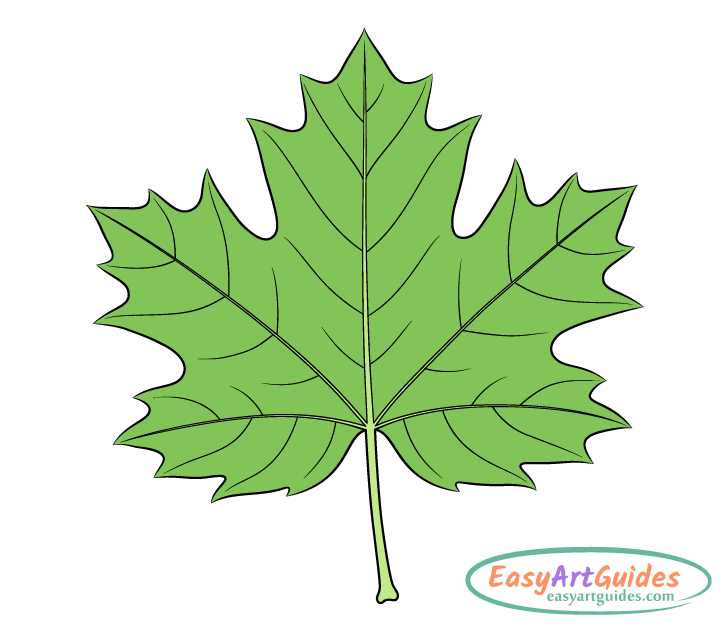
For a summer or spring leaf make it a solid green as shown in this next example.
Step 6 – Add Gradients to the Color
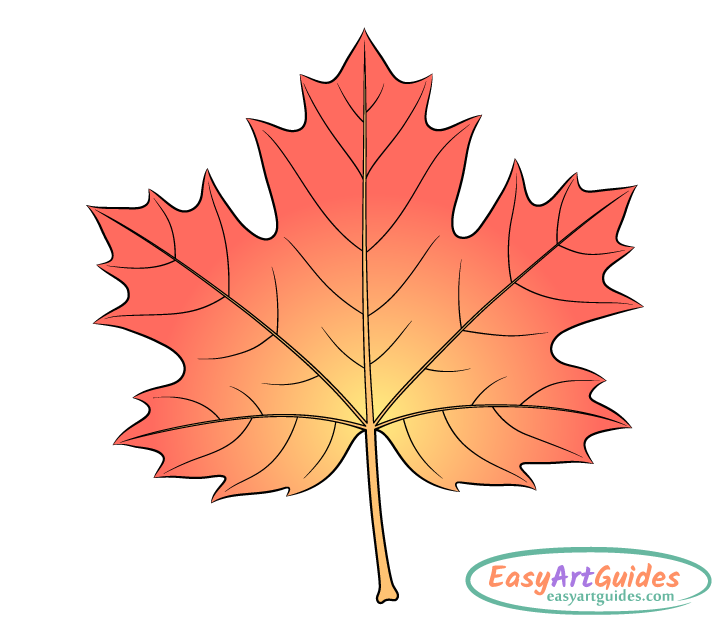
To make the drawing of a fall maple leaf more interesting create a gradients going from the yellow around base/center into orange, red and then a darker red around the edges.
An easy way to create these gradients is to use a red pencil crayon. Start from the outer tip of each section and gradually blend the red into the yellow by applying less and less pressure to the crayon.
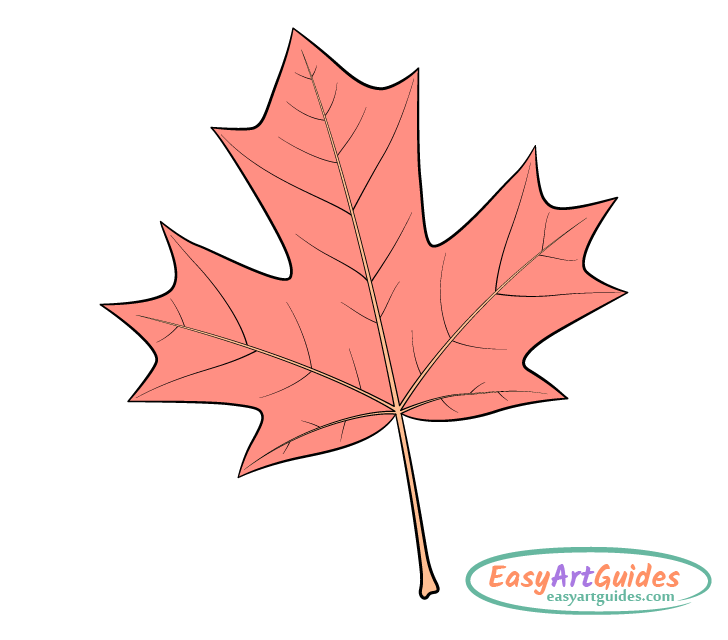
Be careful not to press too hard on it. You want to create the gradient gradually in several layers to insure that it’s smooth.
You can also optionally add a tiny bit of blue into the darker red around the edges to give those areas a slightly purple tint.
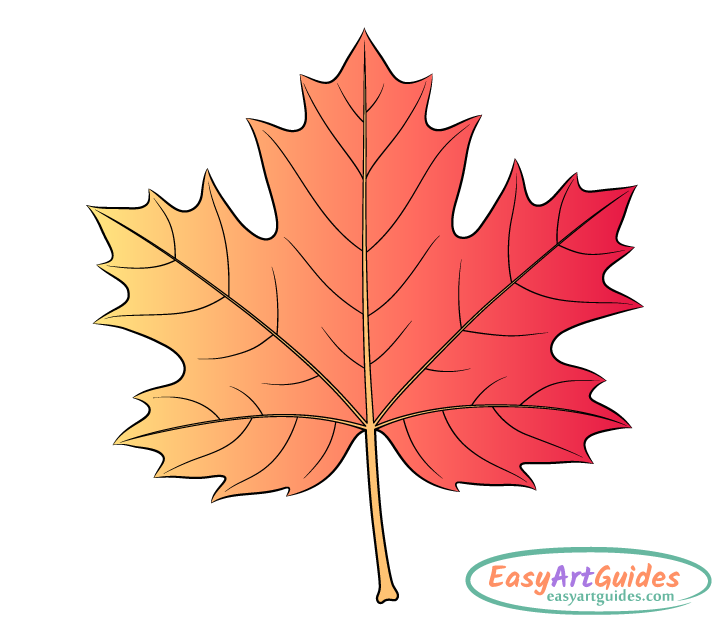
Optionally, you can do the gradient running from one side to another as shown in this next example.
Conclusion
Maple leaves have very interesting and fairly distinct shapes. They can look particularly nice in the fall as they turn various bright colors.
This guide show how to draw such a leaf by first illustrating how to create it’s characteristic shape with the help of some basic guide lines. It then provides examples of different coloring options.
Hopefully, you’ve found the provided tips and example helpful. For more similar drawing tutorials also try the following: