How to Draw an Owl Easy (11 Steps)
This guide shows how to draw an owl by outlining various parts of it’s body step by step. It also shows how to color the drawing afterwards.
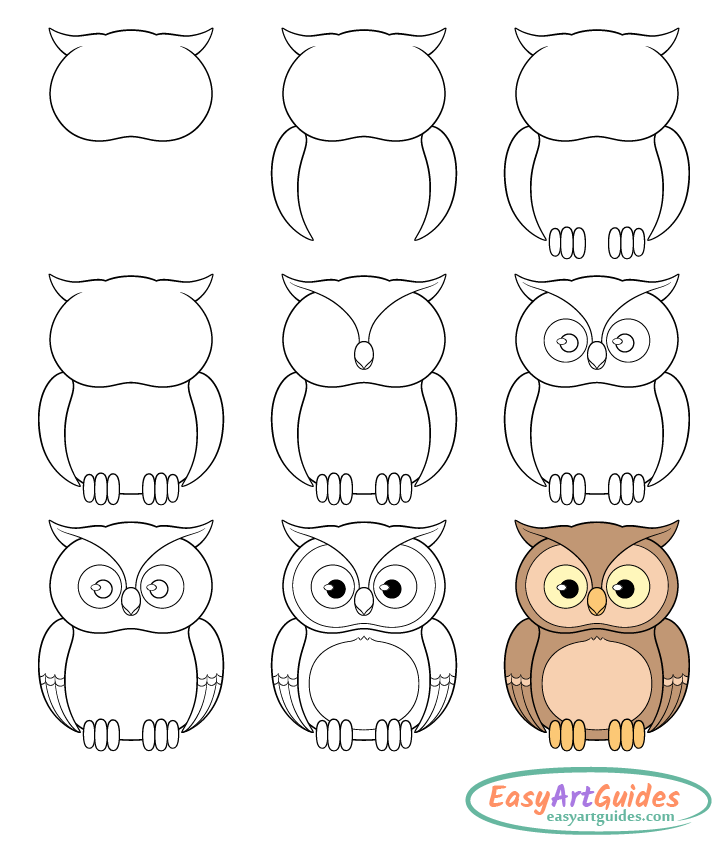
There are many difference species of owls. This guide illustrates how to draw a great horned owl, one of the largest birds of this kind. The artwork in the examples is created in a somewhat simplified style, however, it still takes into account the main features characteristic of such an animal. As a result, in addition to making the guide fairly beginner friend it can also help you create an easily recognizable drawing.
As mentioned, the owl is drawn step by step. The examples are done in a logical order where the larger parts of the owl’s body and the parts the help you draw other areas are added first.
Start the drawing in regular pencil and try and make fairly light lines as the steps are put together in a way which requires some erasing. You can trace over your artwork with a black marker once you’ve added all parts of the owl. If you don’t have one around, you can simply darken your lines with the pencil.
Step 1 – Draw the Owl’s Head & Body
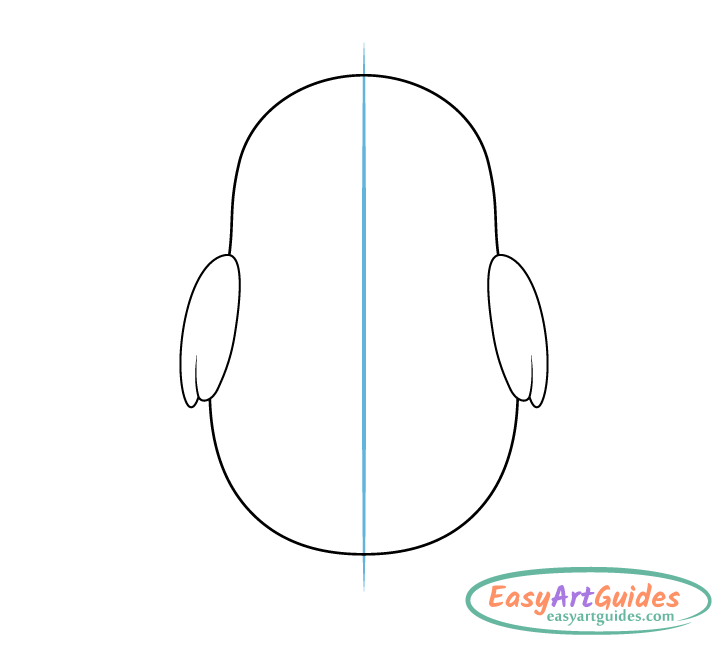
Begin by outlining the combined shape of the owl’s head and body. This outline should look something like a squash. Draw a rounded head that transitions into a wider and taller body.
To make it easier to see if the drawing is fairly symmetrical, you can make a straight vertical line through the middle of wherever you wish to position the owl. In the examples it’s shown in blue but you can make it very lightly in regular pencil so that it can easily be erased later on.
Step 2 – Draw the Upper Parts of the Wings
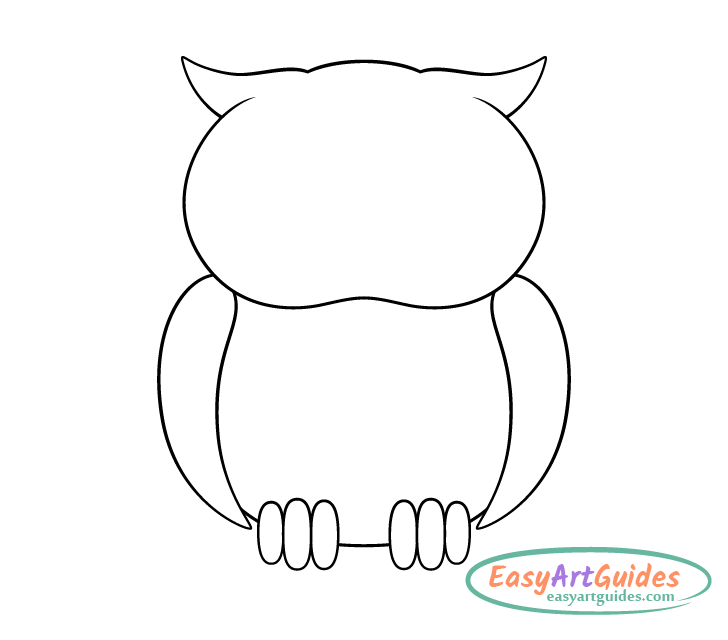
Overlapping the sides of the body, draw the upper parts of the wings. Make their overall shapes somewhat similar to ovals but with rounded splits on their bottom ends. You can erase the areas of the body that they overlap after drawing them in.
Step 3 – Draw the Lower Parts of the Wings
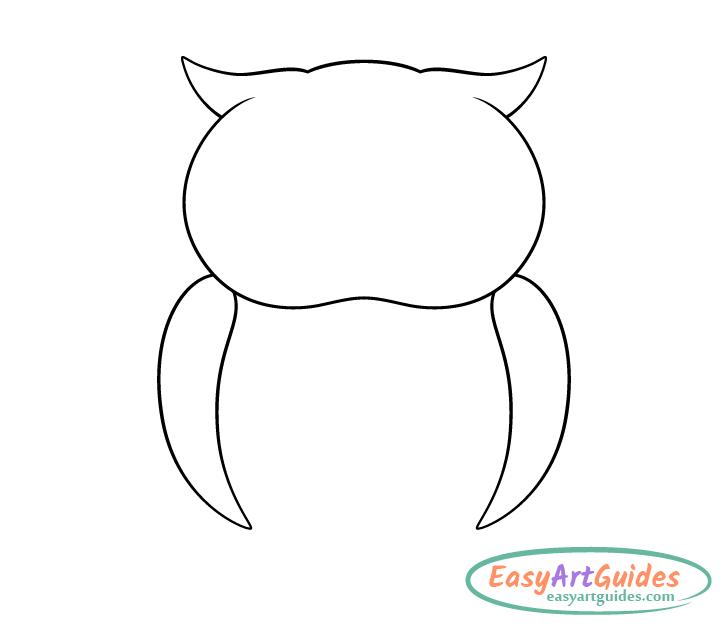
Add the lower parts of the wings going down from the sections in the previous step. Make these curved so that they hug the shape of the body as they run down. Draw each one as a pair of feathers that get narrower as they go down with one coming out from behind the other. Again, erase the parts of the body’s outline that they overlap.
Step 4 – Draw a Pointy Beak
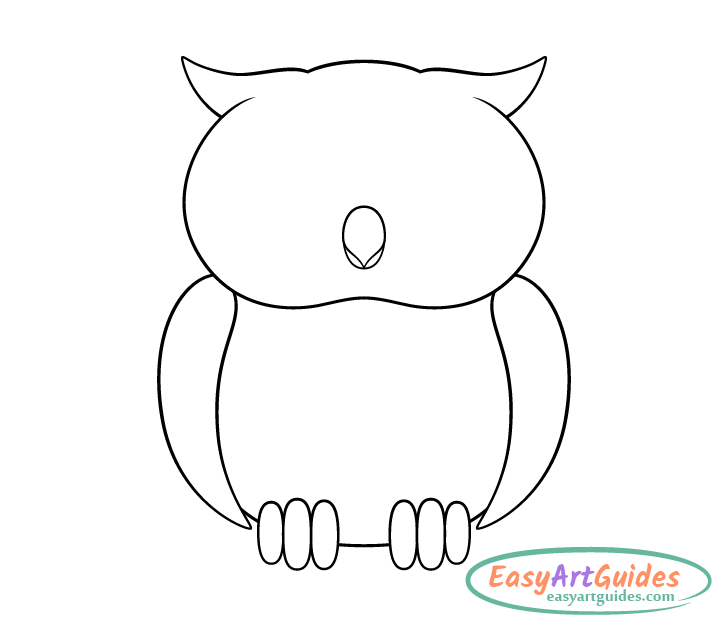
In the middle of the head running slightly past it’s bottom draw the break. While the beak is fairly small it’s important in helping you draw the rest of the owls face. Make it’s shape similar to that of a carrot but with slightly more rounded sides than carrots generally have. Give it a rounded top as well and define it’s bottom with a pointy tip.
Step 5 – Draw the “Owl Horns”
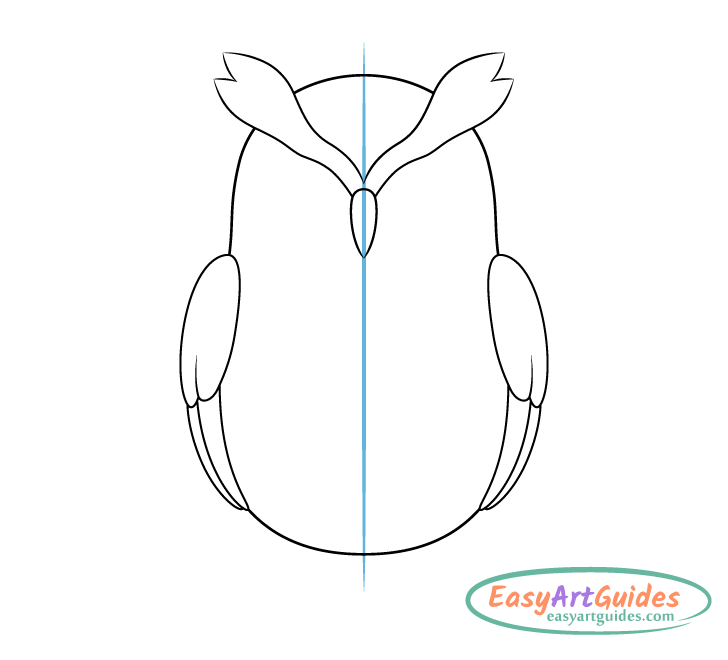
Outline the feather formations on the owl’s head that look like horns and give the bird it’s name (horned owl).
Draw these running up from the top of the beak and splitting to each side of the head as they go up. Add little downwards dips into the outlines around the bird’s eyebrow areas. Make the “horns” get significantly wider near their ends and then narrower again ending with a pair of splits (one on each side). This splits will help create a hint of individual feathers.
Step 6 – Draw the Owl’s Face
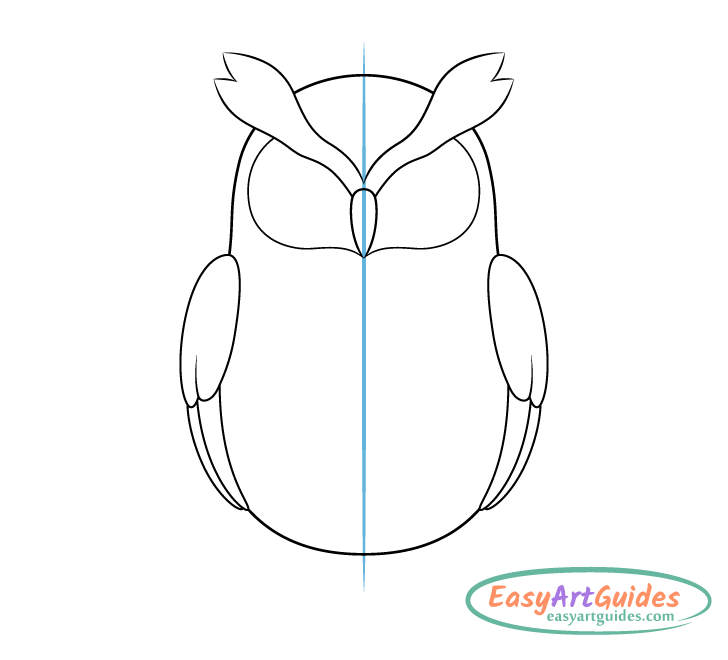
Outline the lighter feather area that horned owls have along their face. Draw each side of this running down from the horns and eventually curving into the bottom of the beak.
Step 7 – Draw Large Round Eyes
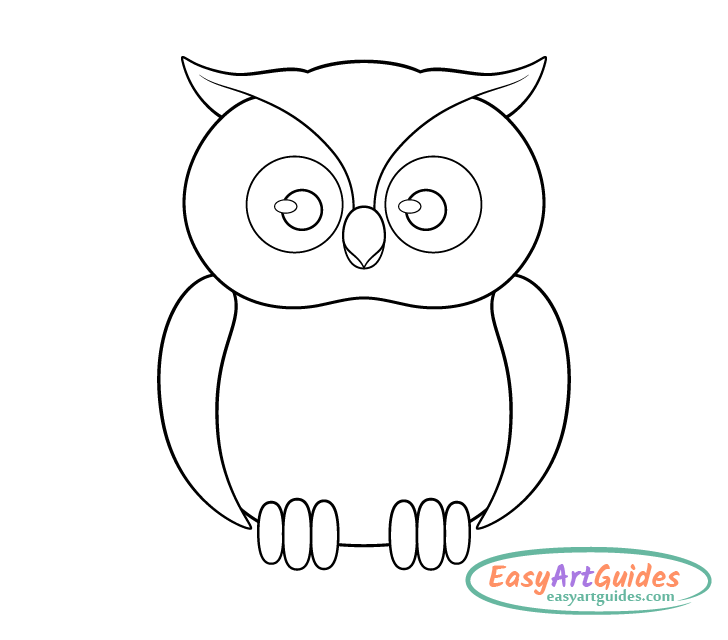
For yet another feature that is very characteristic of owls in genera, draw large round eyes. Position these so that their tops are slightly covered by the “horn” feathers.
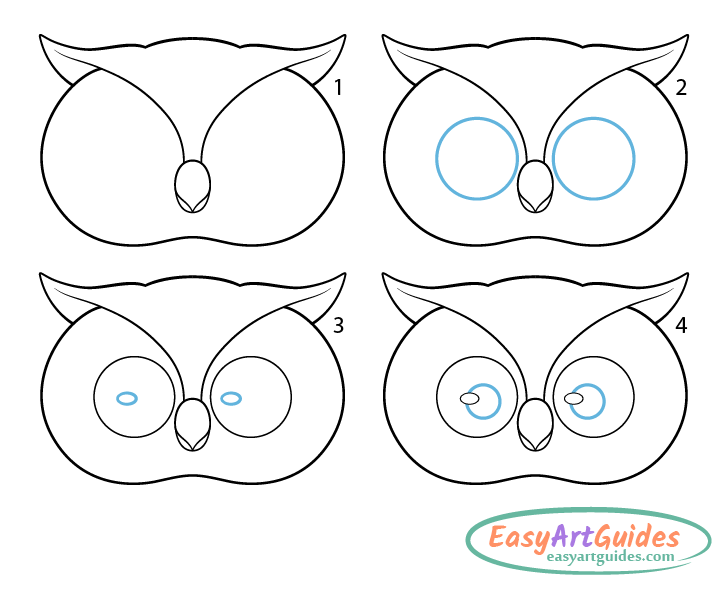
First, define the other shapes of the eyes with a pair of circle. Next, draw the pupils as a pair of smaller circles with each directly in the center of the main outline. Finally, draw a pair of oval shaped reflections overlapping the pupils. You can erase a little bit of each pupil’s outline when adding them in.
One important thing to note for this step is that when you draw the reflections be sure to position them on the same side of each eye (on the left in this case). Adding the reflections on opposite sides of the eyes is a common drawing mistake.
Step 8 – Draw the Feet
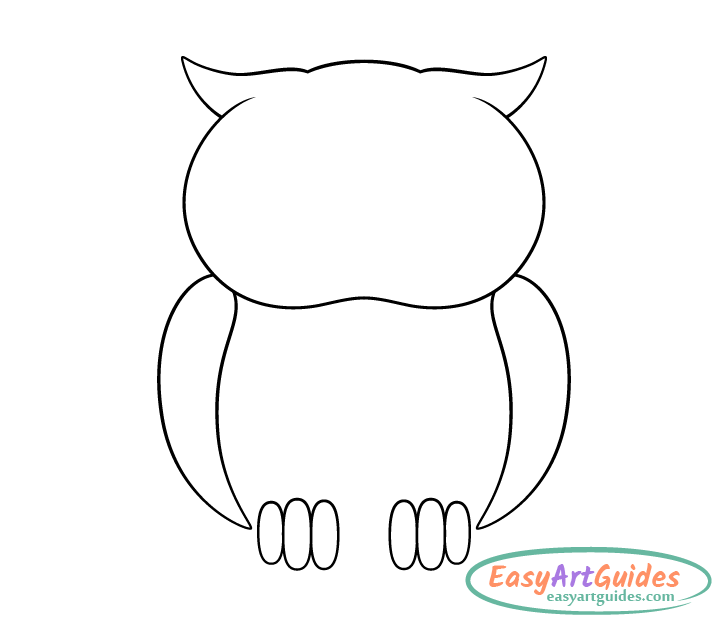
In this case the owl’s feet are drawn as though it’s sitting on a branch. Outline three toes for each foot. Make all of them slightly curved with their shapes looking a bit like little sausages. Afterwards, erase the parts of the body’s outline that they overlap.
Once you’ve added the feet erase the center guide line.
Step 9 – Draw the Talons
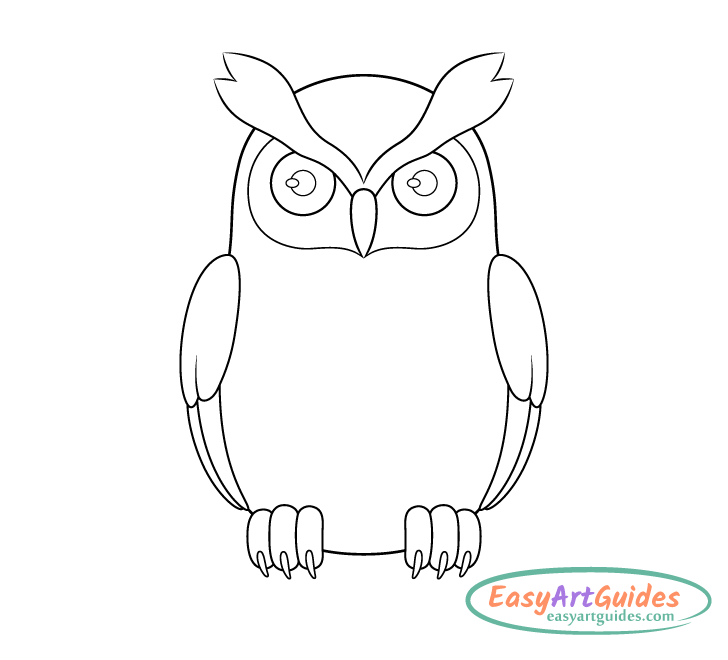
Draw the talons (claws) going down from the toes. Erase a little bit of each toe’s outline when adding them. Make the talons curved and draw them to be narrower as they go down.
After drawing the talons, trace over your lines with a black marker or darken them with the pencil.
Step 10 – Draw the Feathers Along the Body
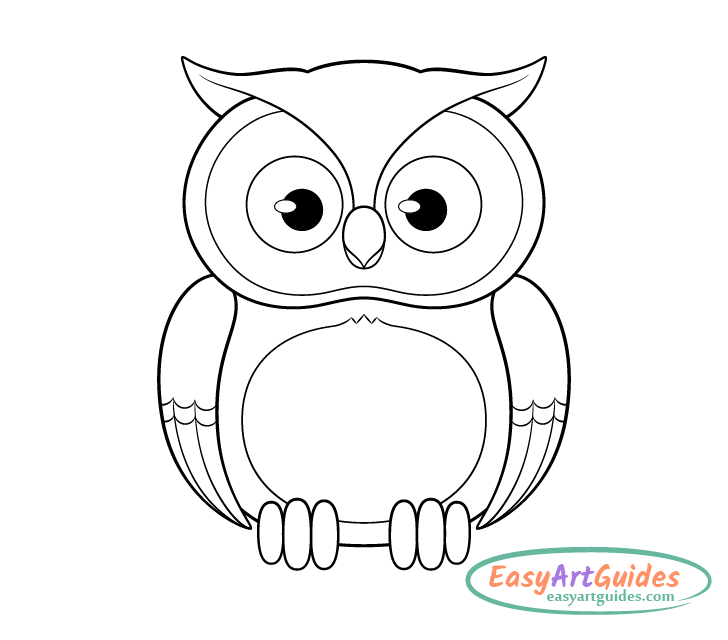
For the last set of details, add a bunch of feathers along the owl’s body. Draw these in rows spaced some distance apart from one another and shaped similar to the letter “U”.
For drawing a different kind of bird in a similar style see:
How to Draw a Duck Step by Step (Mallard)
Step 11 – Color the Owl Drawing
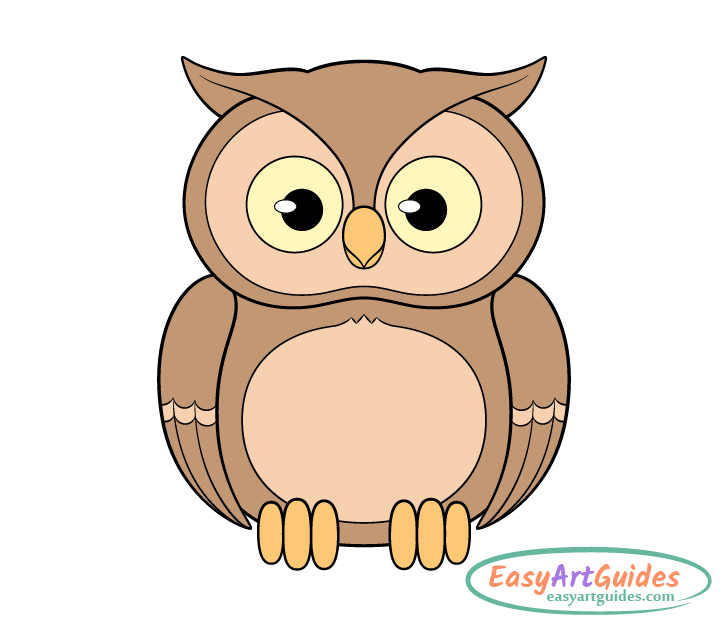
An easy way to color the owl is with pencil crayons or water based paints.
However, if you don’t have any colors you can alternatively shade the drawing different values of greys.
To color the owl as in the example do it as follows:
- Main area of the body – light brown
- Face area – light orange
- Horn shaped feathers – dark brown
- Beak – orange
- Eyes – yellow
- Pupils of the eyes – black
- Upper parts of the wings – dark brown
- Lower parts of the wings – grey
- Feet – orange
- Claws – grey
Conclusion
This guide shows how to draw an owl is a somewhat simplified style. The example is of a great horned owl in particular which is one of the larger species of this type of bird. The steps illustrate how to outline the animals various body parts and how to color the drawing afterwards.
As shown with the owl, generally it’s a good idea to start a drawing the largest and most important parts of your subject. You can then gradually work down to the smaller details. In this case those were the talons and feathers.
If you like these kinds of simple step by step art guides, also be sure to try the following: