How to Draw a Teapot in 6 Steps
This tutorial show how to draw a teapot using easy to follow step by step instructions and illustrations.
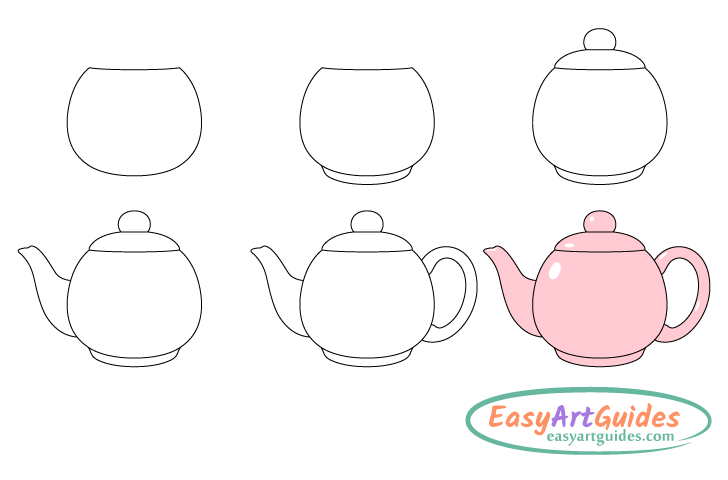
The teapot shown as the example has a fairly classic design with a loop handle at the back, a “swan neck” spout and a knobbed lid. Overall, it has a fairly realistic shape and proportions for such a kitchen tool. However, it’s drawn in a slightly simplified style to make the tutorial easier and more beginner friendly.
It’s recommended that you start the drawing in pencil so that you have the option of erasing any potential mistakes. Keep you lines light until you’ve defined all of the teapot’s parts. You can then trace over them with a thin black marker (or darken them with the pencil).
Step 1 – Draw the Main Body of the Teapot
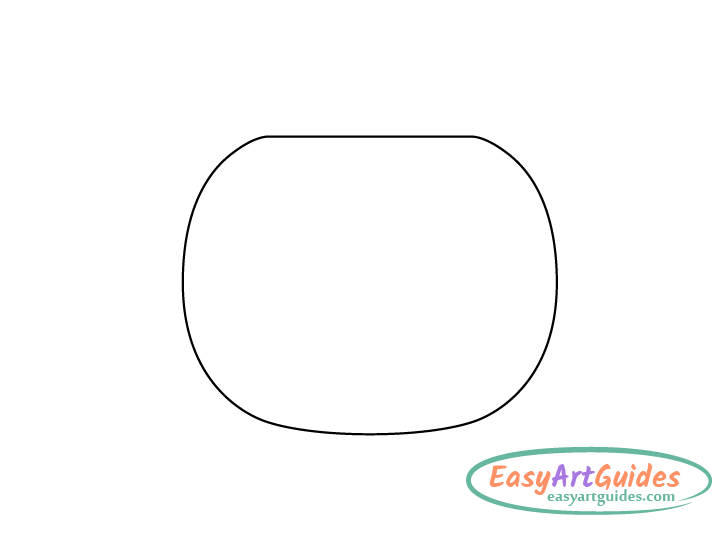
First, draw the teapots largest and most important part, the body. Outline it’s shape with rounded sides and a rounded but slightly flattened looking bottom. Define it’s upper area (the part the lid sits on top of) with a light curve. Overall, make the outline of the teapot’s body wider near the bottom.
Step 2 – Draw the Base at the Bottom
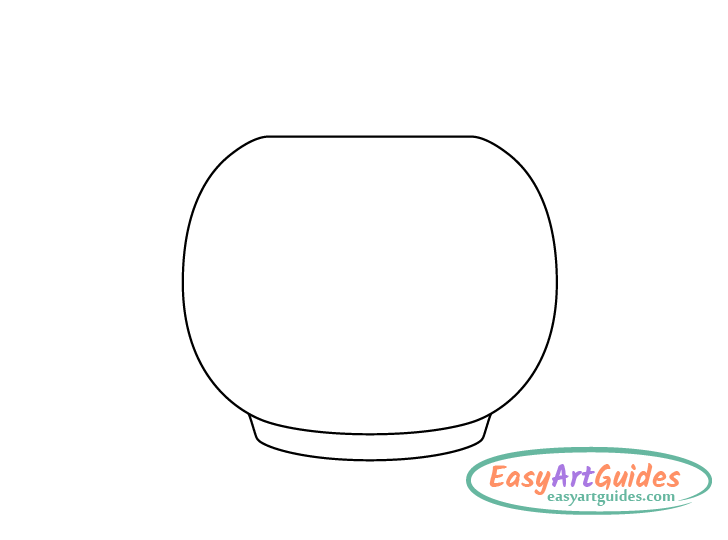
At the bottom of the body draw the base. Make it’s bottom pretty much follow the curve of the corresponding area of the body itself. Also, make the base wider as it goes up.
Step 3 – Draw the Lid With a Knob Handle
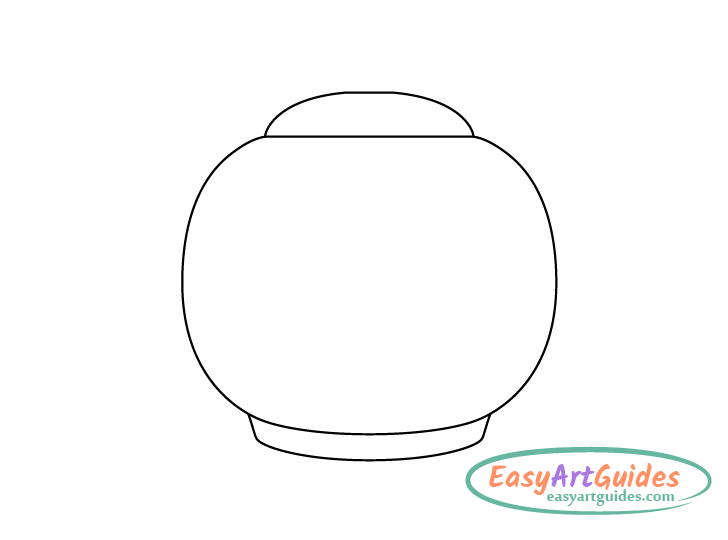
Resting on top of the teapot draw the lid. Make it fairly rounded but give it a flat area in the middle.
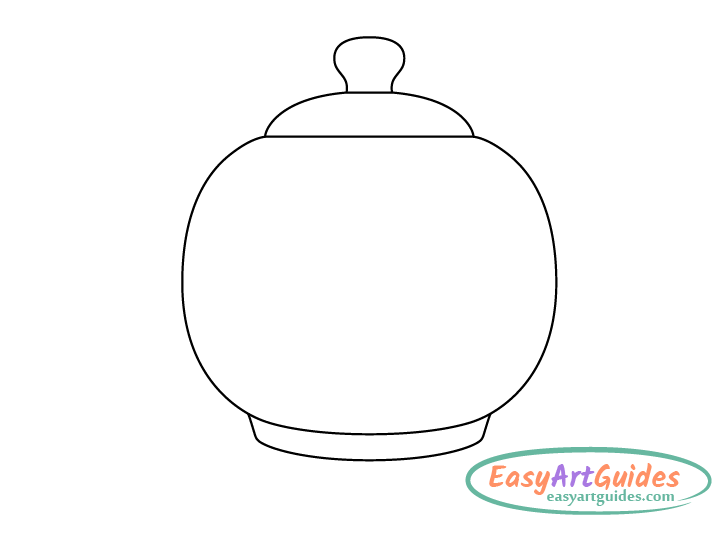
On top of the flat section (at the center of the lid) draw the knob. Outline it to be oval in shape. However, make the oval “cut off” at the bottom where it joins with the lid.
Step 4 – Draw the Spout with a “Swan Neck” Shape
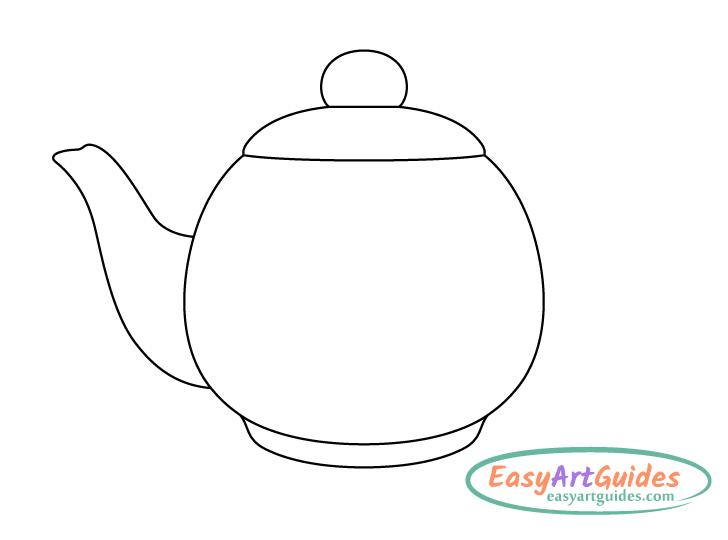
Going up from the lower end of one of the sides draw the teapot’s spout. Make it wider at the bottom and narrower as it goes up. Also, at first draw it curving slightly upwards and then forward (somewhat like the neck of a swan).
Step 5 – Draw a Looped Handle
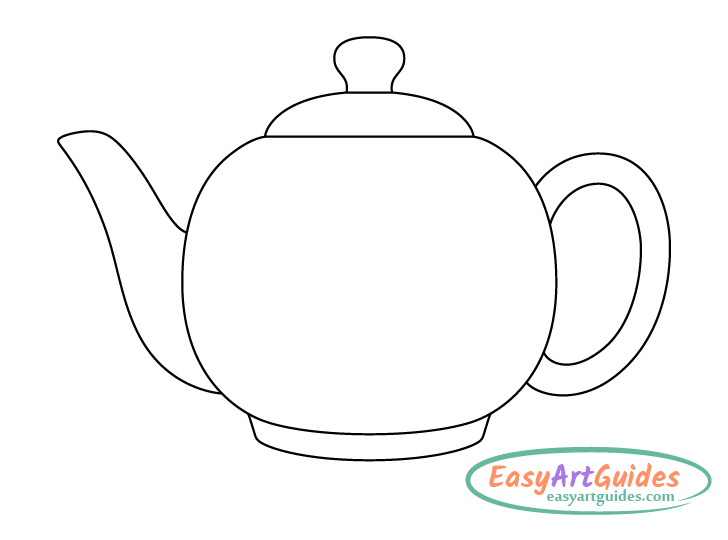
On the side opposite the spout draw the teapot’s handle. As mentioned at the start of the tutorial in this case it’s looped. First, define the handle’s outer shape and then draw a second somewhat similar shape inside of that.
With the last part added you should have a full outline of the teapot. If you are happy with how it look, trace over your lines to darken them. Either press harder on the pencil or use a thin black marker. Otherwise, make corrections prior to doing so.
Step 6 – Color the Teapot Drawing
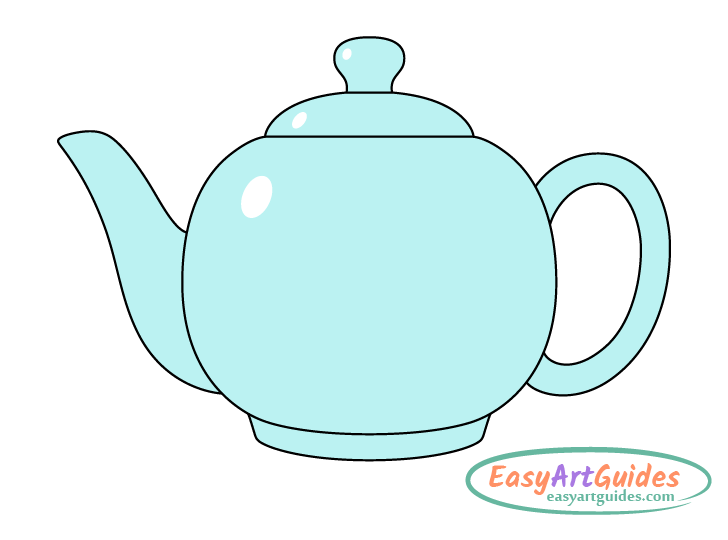
For the last step color the teapot. In this example it’s pink but you can use just about any color you prefer. However, before coloring lightly outline some reflections along the teapot’s various parts. Either do this in regular pencil or in whatever color you plan on making the teapot.
Add a narrower reflection along the upper end of it’s snout and small fairly round reflection along the upper end of the spout facing side of the knob. Next, add an oval shaped reflection near the bottom of the spout facing side of the lid and a fairly large reflection along the upper end of the same side of the body. Afterwards, add a pair of reflections to the handle. Position one on the outer side of it’s upper area and one along the inner side of it’s lower area (as shown in the example above). Finally, fill the line drawing of the teapot with a solid color but leave the reflections white.
The reflections will help convey that the teapot has a smooth surface and will also help give the artwork a more three dimensional appearance.
Conclusion
This tutorial shows how to draw a fairly traditional looking teapot with a swan neck shaped spout, a looped handle and a lid with a knob. The example drawings are done with fairly realistic proportions for all of these parts but use a slightly simplified beginner friendly style.
The examples demonstrate how to defined the teapot starting with it’s largest and most important part (the body) and then how to add all of the smaller parts onto this. (a good overall approach to drawing).
The final step shows how to apply some very basic color in a way that helps create an appearance of a smooth surface.
If you like these kinds of art guides with simple but helpful drawing tips, also be sure to try the following: