How to Draw Scissors (6 Step Tutorial)
This guide shows how to draw a pair of scissors with a breakdown of adding their various parts in different steps.
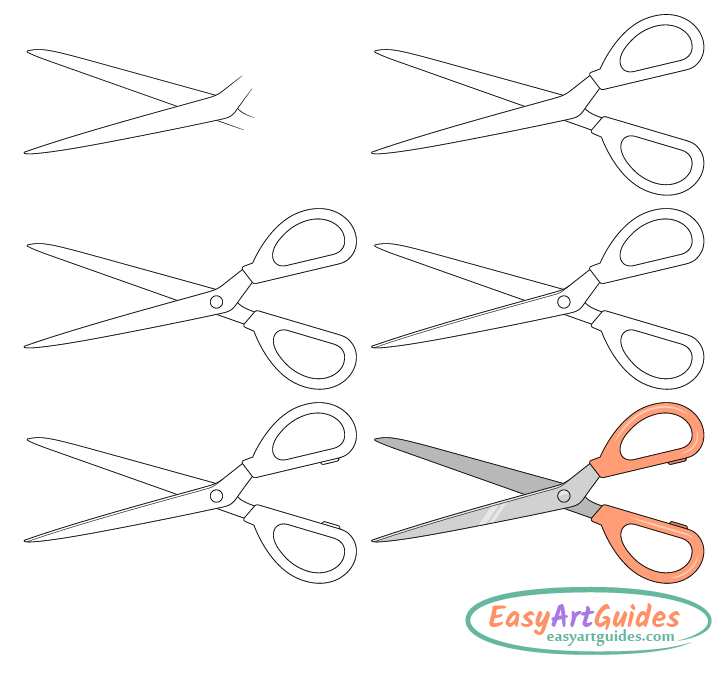
The scissors in the example have a fairly standard design with a pair of a blades, bows (handles) and a screw to hold them together. The bows also have bumpers on their inner ends.
The guide shows how to first make a line drawing of the scissors and then how to color and shade them. In addition to showing how to draw the scissors when they are open there is also an example that shows the same pair when they are closed. If you wish to draw the closed pair instead, you can still use pretty much all the same steps as you would for drawing them when they are open.
While the guide is design in such a way as to not necessarily require any erasing, it’s still recommended that you star the drawing in pencil and use light lines. This way you can more easily correct any potential mistakes. Trace over your drawing with darker lines once you have all parts of the scissors outlined. You can either do it with the pencil or use a thin black marker.
Step 1 – Draw the Two Blades of the Scissors
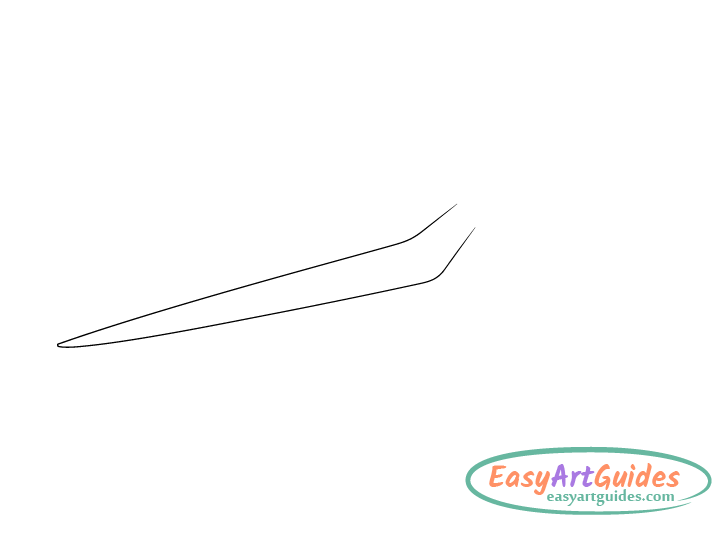
First, outline the blades of the scissors. Start with the one facing towards the viewer. Make it’s cutting edge side straight and the opposite end slightly curved. Also, draw the blade to be wider as it goes towards the back. Near the end, add an upwards bend past which the blade starts to get narrower. You can leave the very back of the outline open.
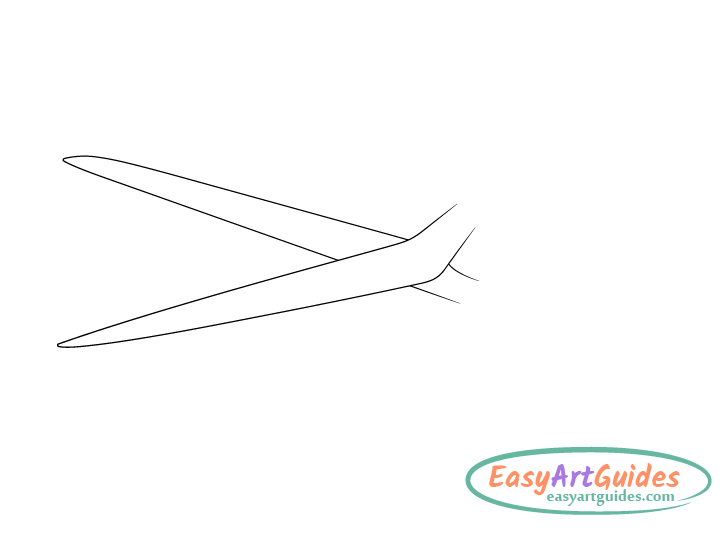
Draw the second blade overlapped by the first one. Give it a similar shape that mirrors the the one in the front. However, the blades do not need to be perfectly identical.
When drawing the second blade you may (optionally) wish to draw it as though the first blade is transparent and then erase the part hidden behind it. This can help you avoid mistakes like the area before the hidden part and after it being misaligned.
Step 2 – Draw the Bows (Handles/Finger Loops)
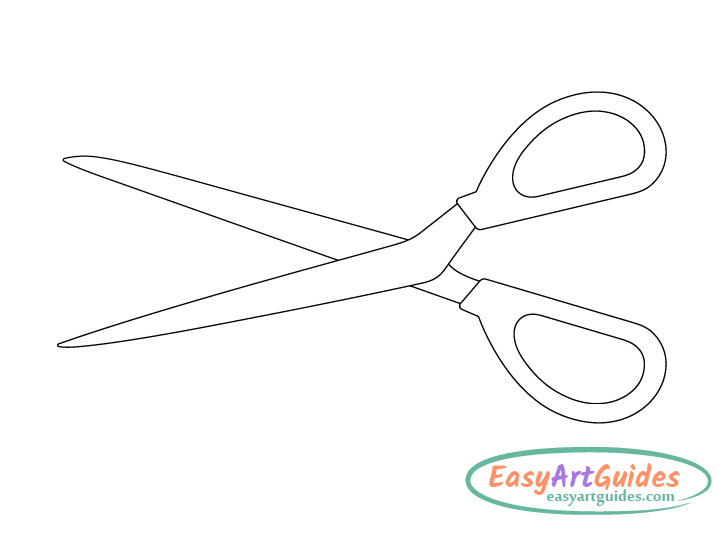
Connected to the back of each blade draw the handles of the scissors (called the bows). In this case the two are exactly the same. Draw the bows with curved outer ends and flat inner ends. Add the finger holes after defining their outer shapes. These should be similar to the main outlines but smaller.
Step 3 – Draw the Pivot Screw
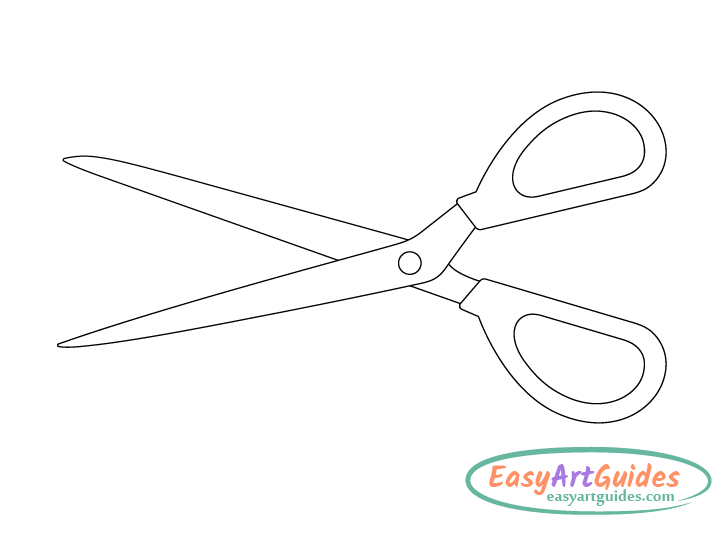
Draw the pivot screw that connects scissor blades to have a circular outer shape. Next, draw a line through the center of the circle to show the indent some screw times have in that area (called the slotted drive).
Step 4 – Draw the Edge of the Blade
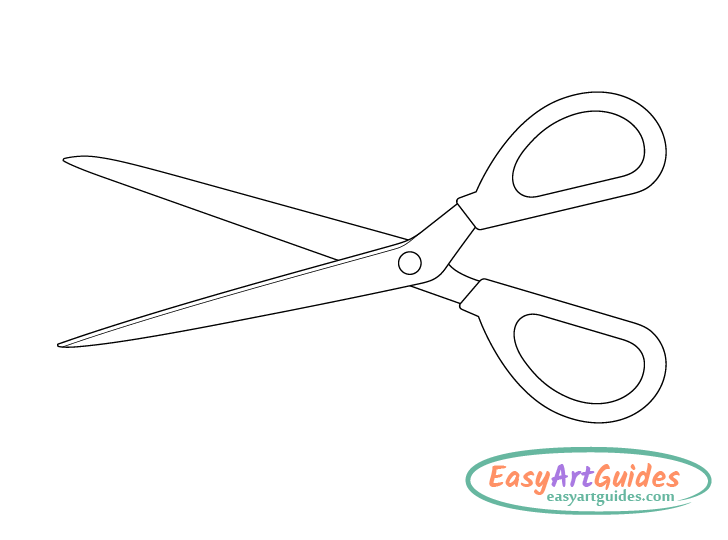
Add the edge of the viewer facing blade by making a line running from slightly below it’s tip towards the back. Draw this curving up a little bit before it reaches the bend.
The edge on the second blade is facing away from the viewer so there is no need to draw it.
Step 5 – Draw the Bumpers on the Bows/Handles
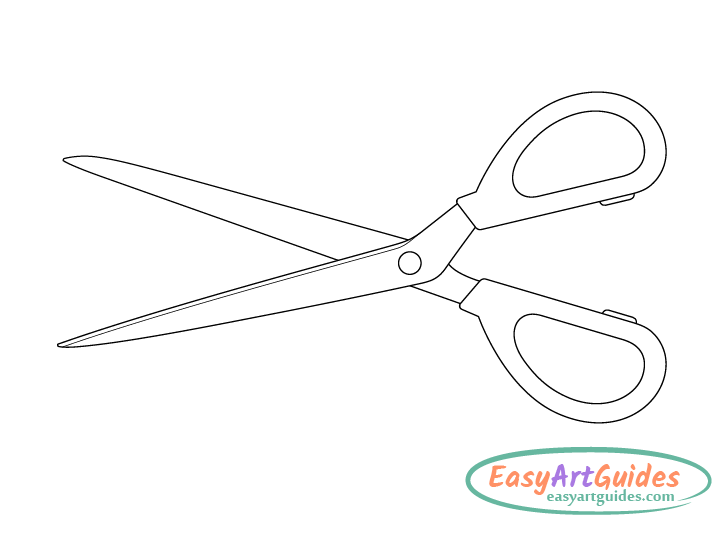
Finally, for the last set of details draw the bumpers (the little bumps on the bows). Draw these near the back of each of their inner sides.
Once you have the bumpers outlined trace over the scissors drawing with darker lines. You can either press harder on the pencil or use a thin black marker.
Step 6 – Color the Scissors Drawing
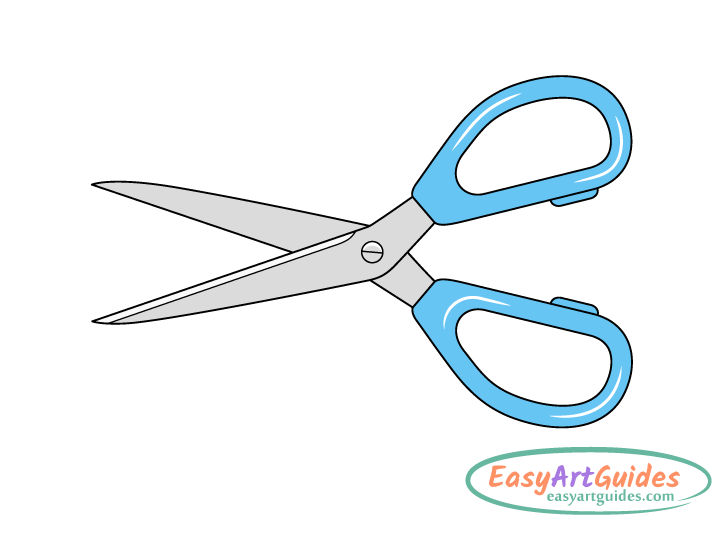
To finish the scissors drawing give it some color. Make the blades and screw grey and the edge a very light grey (for a metallic look). Give the screw a light grey strip along it’s top as well. Make the bows blue (or any color you like).
When coloring the bows leave a pair of long narrower strips along each of them. These will show reflections that will help convey that the bows have smooth texture.
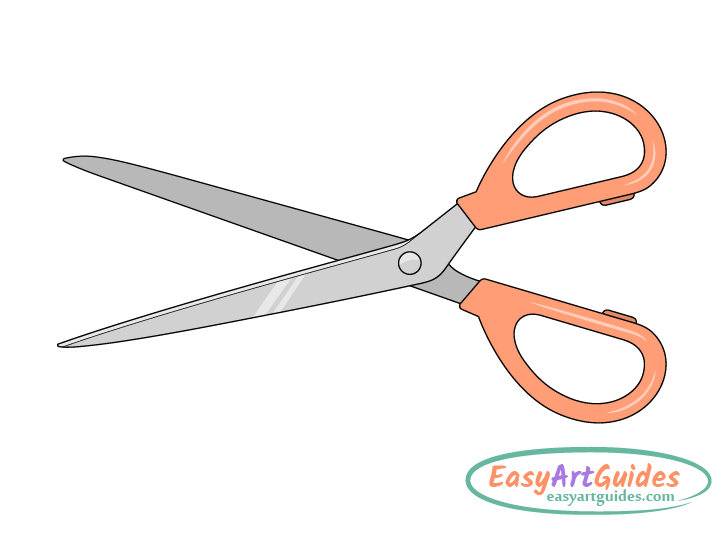
After applying the color, add some some shading. Make the back blade a slightly darker grey and also darken the bumpers. You can can create all of the greys and shadows by using a regular pencil.
Even a little bit of basic shading such as this will help add some depth to the drawing.
Bonus – Closed Scissors Drawing
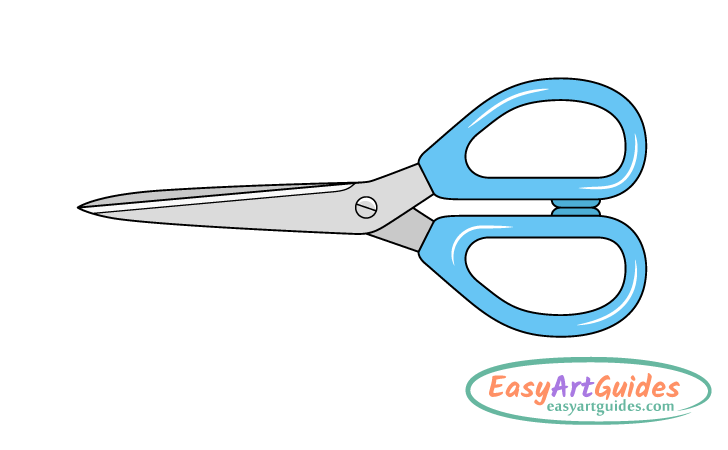
Above you can see the drawing of the same pair of scissors when they are close (as was mentioned at the start of tutorial). You can use this for reference if you wish to draw them in such a state. Again, as already mentioned, you can still use pretty much all the same steps as for drawing the scissors in an open state.
Conclusion – The Right Shapes & Some Shading Can Make a Nice Drawing
This guide shows how to draw a pair of scissors with a fairly simple and standard looking design. They are shown with parts common for such an item (blades, bows, screw and bumpers) and characteristic shapes.
The guide first explains how to give the scissors a shape characteristic these kinds of tools, It then illustrates how to apply some color and shading to help give the drawing an appearance of depth and to help convey the texture of the materials the scissors are made from.
When combined the above can make a nice and easily recognizable drawing of scissors.
If you like these kinds of easy to follow step by step guides, also be sure to try the following: