How to Draw a Fork Step by Step
This tutorial shows how to draw a fork from 3/4 view in six steps. It provides example with simple art and easy to follow instructions.
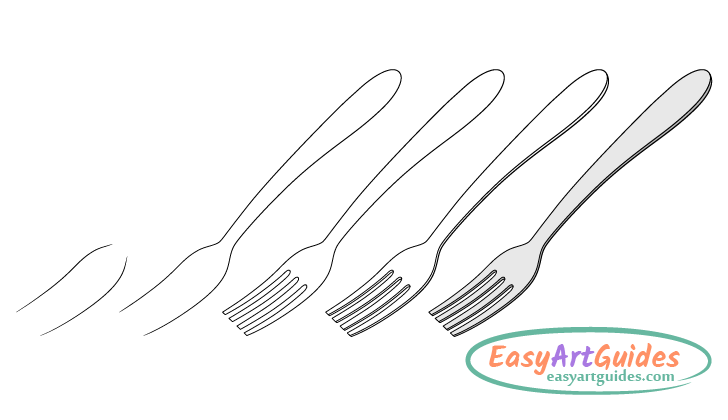
The fork in the example has a slightly simplified but overall traditional look. The main challenge in drawing such a utensil can be it’s tines. For this reason in addition to the main stages of the tutorial shown above, there is a more in depth breakdown of drawing them shown further down.
It’s recommended that you start the tutorial in pencil and make light lines that you can easily erase as you may need to do so in one of the steps. Light pencil lines will also make it easier to correct any potential mistakes. You can darken them after outlining all parts of the fork.
For drawing a spoon see:
How to Draw a Spoon in 6 Easy Steps
Step 1 – Outline the Head of the Fork

First, make a basic outline of the fork’s head. Draw this to be slightly wider as it goes towards the back (for most of it’s length) and then much narrower near the end. Leave the front and back of the outline open.
Step 2 – Draw the Handle
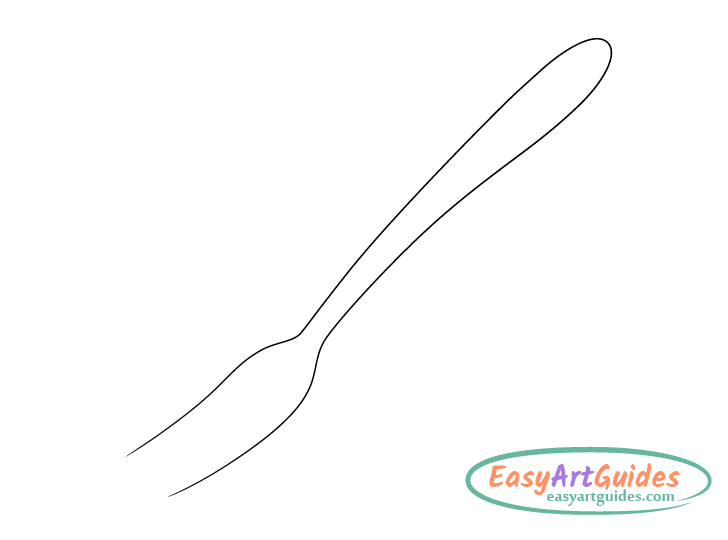
From the back opening of the head’s outline add the fork’s handle. Make this wider as it goes out towards the back and then narrower again near the end. Make the very end of the handle rounded. Also, draw the handle to be slightly curved, as is very common for utensils of this kind.
Step 3 – Draw the Tines
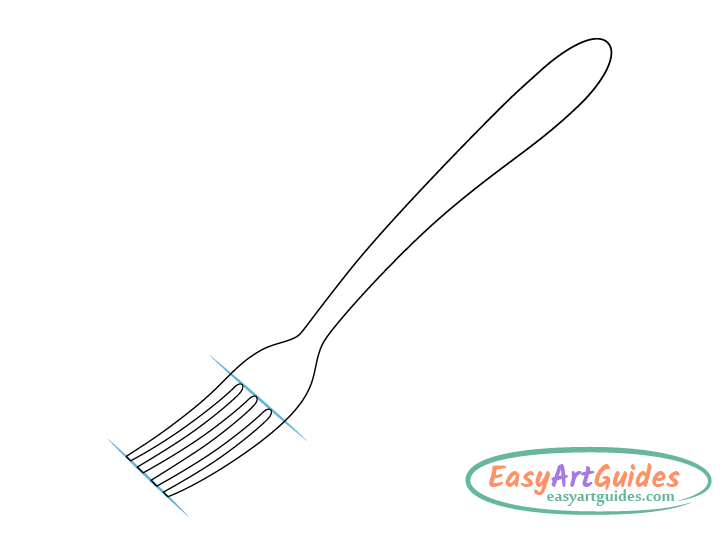
As already mentioned, drawing the fork’s tines can be somewhat of a challenge. For this reason a step by step breakdown of drawing them is provided below.
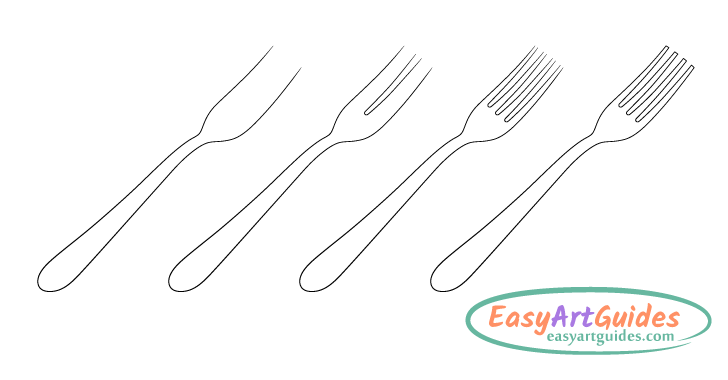
In this case there are four tines in total. To make it easier to evenly distribute them start by drawing the split in the middle. Next, draw the splits on the sides. Make the backs of these splits curved.
Finally, connect the tips in between the splits to finish the outline of the thines. To do this it may be easier to make one solid line and then erase the areas in between them.
Step 4 – Draw the Side of the Handle
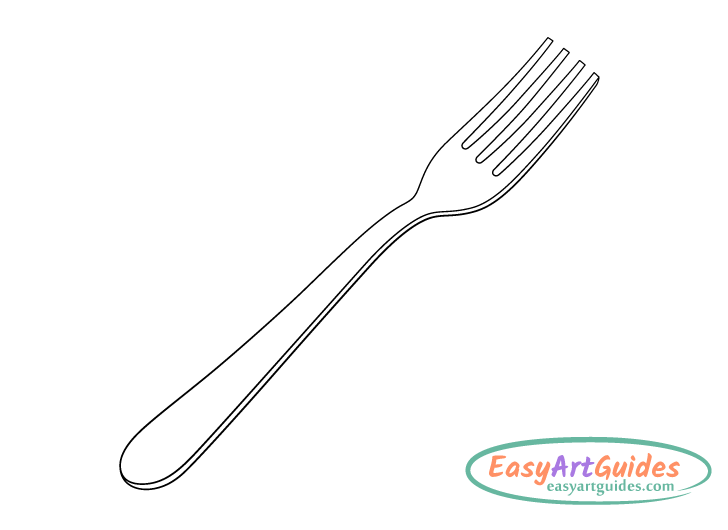
Draw the side of the fork to show the thickness of the material it’s made from. Do this by adding a line slightly below the viewer facing side of the fork’s main outline that pretty much follows it’s shape. This line should curve into the main/upper outline at the back of the fork and angle upwards at the front.
Step 5 – Draw the Sides of the Tines
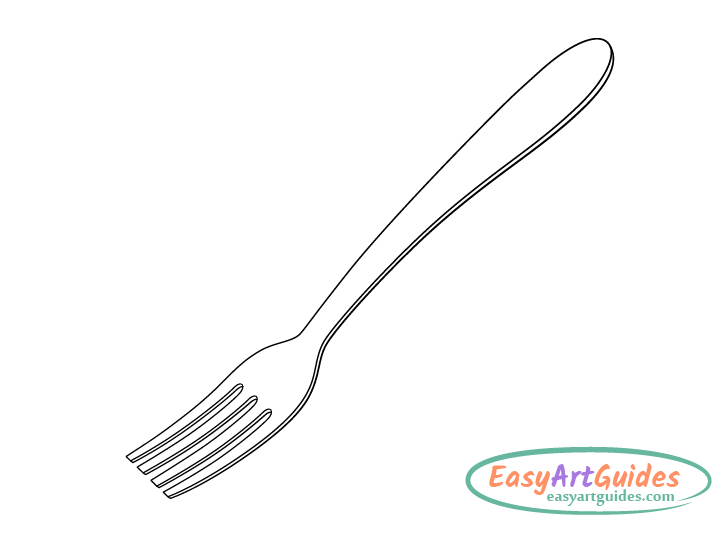
Similar to the side of the fork add the visible side of each of the tree remaining tines. Again, draw the lines that define these a little bit below the main/upper outline of each tine. Make them angled up at the front and draw them curving sideways into the outlines of the splits between the tines at the back.
Step 6 – Color & Shade the Fork
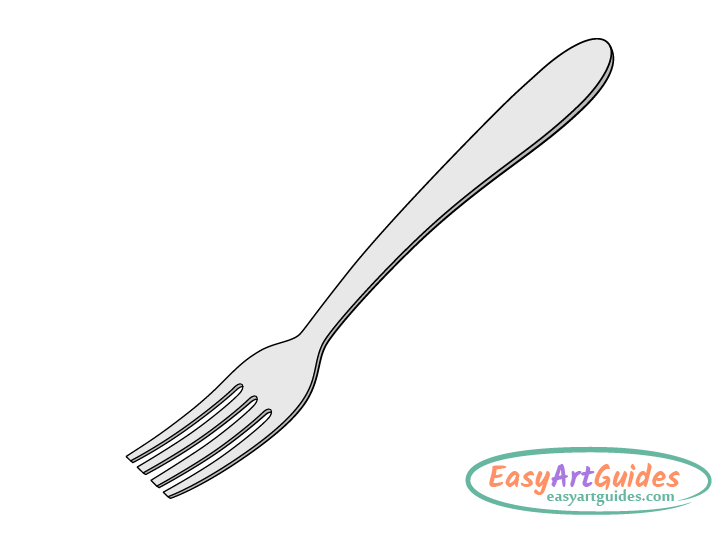
To color/shade the fork you can make it’s upper outline a light grey (so that it looks like metal). Make it’s side and the sides of the tines a darker grey to show shadows over those areas. This will make it look like the light is coming from somewhere above the fork and help give it a more three dimensional appearance. An easy way to create the greys is simply by using a regular pencil and applying more ore less pressure to it as needed.
Alternatively, you can make the fork just about any color if you want it to be plastic or a yellow brown if you want to show that it’s wood. However, you can still darken it’s side and the sides of the tines with a regular pencil to create the shadows.
Conclusion
This tutorial shows a simple way to draw a fairly traditional looking fork with four tines. It also shows an how to apply some basic color and shading and suggests a few potential variations when doing so. Hopefully you’ve found the provided step by step breakdown easy to follow.
If you like simple drawing guides such as this one, also be sure to check out the following: